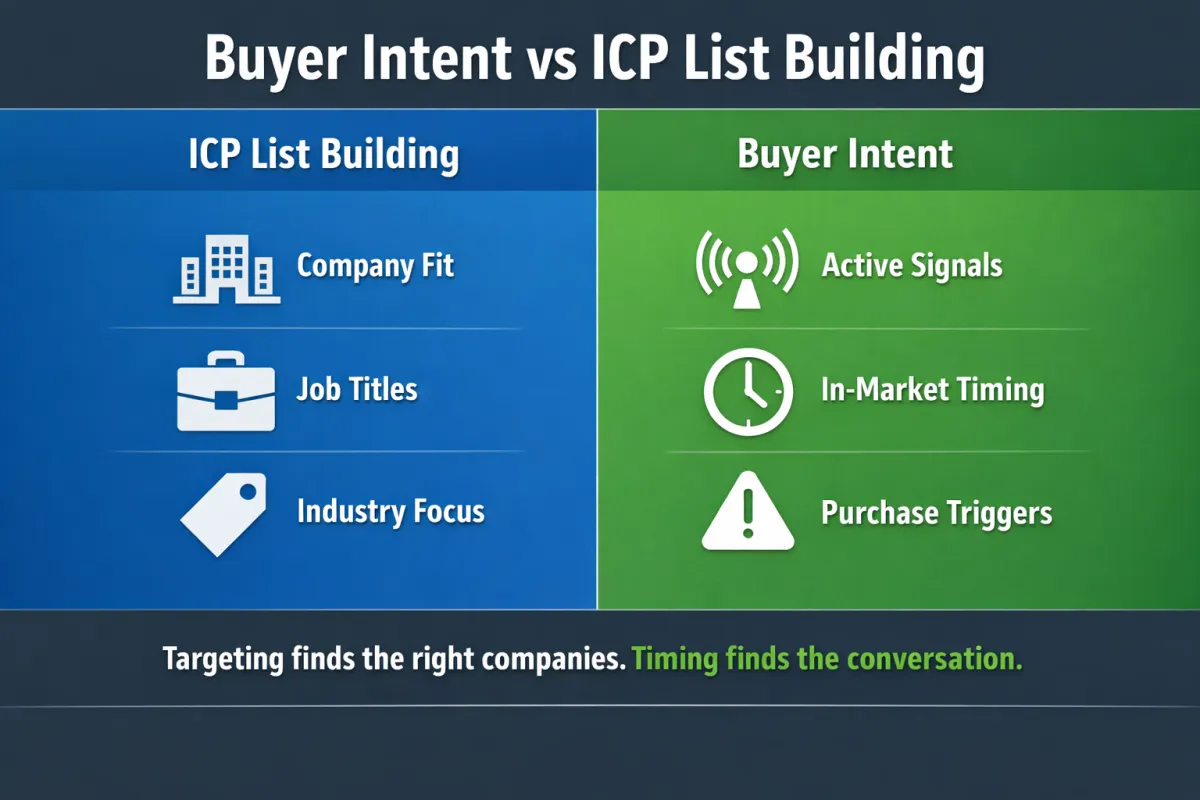
Buyer Intent vs ICP List Building: Why Timing Beats Targeting
Buyer Intent vs. ICP List Building: Why Timing Beats Targeting in Modern Outbound

Most outbound doesn’t fail because your targeting is wrong.
It fails because your timing is.
Founders spend months refining their ICP, building pristine lists, and launching campaigns—only to get inconsistent replies and unpredictable results. The issue isn’t who you’re targeting. It’s when you’re reaching them.
That’s where the difference between ICP list building and buyer intent becomes critical.
What Is ICP List Building?
ICP (Ideal Customer Profile) list building focuses on identifying companies and contacts that look like your best customers.
Typical filters include:
Industry
Company size
Job title
Geography
Tech stack
This approach answers the question:
“Who could buy from us?”
And it’s useful—but incomplete.
The Limitation
ICP tells you nothing about buying readiness.
You’re often messaging prospects:
Too early (they’re not thinking about the problem yet)
Or too late (they’ve already chosen a vendor)
That’s why replies feel random.
What Is Buyer Intent?
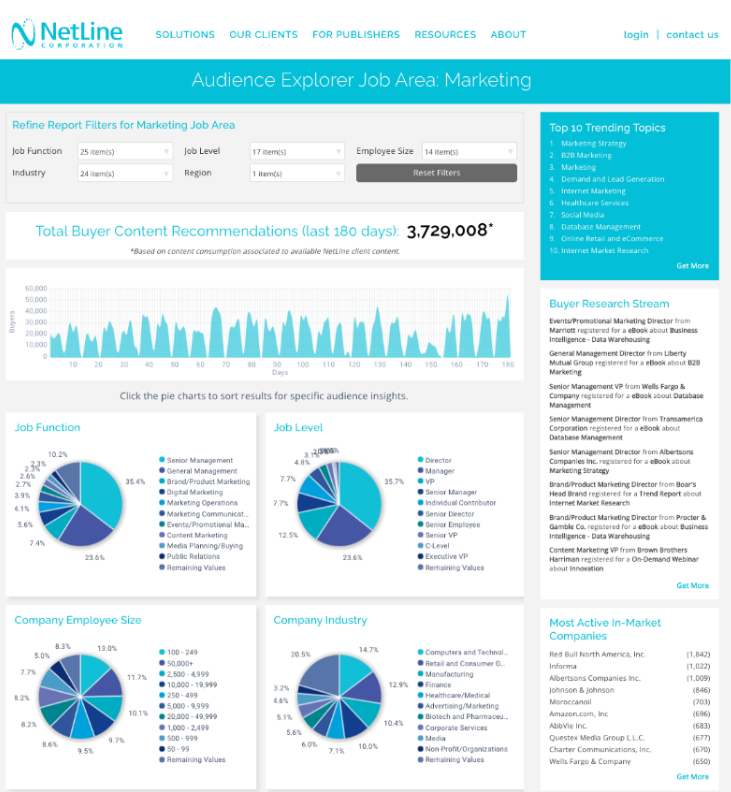
Buyer intent focuses on behavior, not just fit.
Instead of asking who matches, intent asks:
“Who is actively evaluating solutions right now?”
Buyer intent signals can include:
Research activity
Content consumption patterns
Competitive engagement
Solution comparisons
Sales-triggering behaviors
Intent answers the far more important question:
“Who is ready for a conversation today?”
Timing Is the Multiplier
Here’s the truth most outbound teams miss:
Targeting gets you in the room. Timing gets you the reply.
Two companies can match your ICP perfectly.
Only one is actually in-market.
When you engage during an active evaluation window:
Messages feel relevant, not intrusive
Conversations start faster
Objections are lower
Sales cycles compress
This is why intent-led outreach consistently outperforms list-first campaigns.
The Modern Outbound Approach
High-performing teams use a layered model:
ICP defines relevance
Intent defines readiness
Signals trigger outreach
Instead of sending messages hoping someone is ready, you engage when intent already exists.
This shifts outbound from:
Volume → Precision
Guessing → Trigger-based action
Cold → Contextual
Why This Matters for Founders
Founders don’t need more activity.
They need predictable conversations.
Intent-led outbound:
Reduces wasted touches
Improves reply quality
Makes pipeline creation repeatable
And most importantly—it respects the buyer’s timing.
Final Thought
Your funnel isn’t broken.
Your timing is.
If you’re still relying on static lists alone, you’re playing outbound on hard mode. The future belongs to teams that know who’s ready—and act on it immediately.

